The first rung of the career ladder has changed. Education must change, too.
In the last months, as I have studied and incorporated Artificial Intelligence into my work, there is one thing that still amazes me: a task that could have taken hours once, now can be solved within minutes. A tool can explain a topic, summarize a book, translate, programme, create an image, analyze data and propose different solutions almost immediately.
That excites me very much but it also concerns me.
As a school director, but also, as a father, there is one question I keep asking myself again and again:
If a machine can already produce so many answers, what should schools be teaching today?
The easy answer would be: to use Artificial Intelligence.
Though I don’t think that would be enough.
The other easy answer would be to ban it.
It wouldn’t be enough either.
Artificial Intelligence is already part of the lives of our youth. Stanford's 2026 AI Index reports that four out of five high school and college students in the United States already use AI for schoolwork. Yet, only half of middle and high schools have policies regulating its use, and just 6% of teachers believe those policies are clear.
Although this data comes from the United States, the signal is difficult to ignore.
Our students are not waiting for adults to decide what to think of Artificial Intelligence; they are already using it.
Therefore, the question is not whether or not Artificial Intelligence should enter schools.
The question is: what kind of person do we want to form now that it already has?
Imaginemos por un momento el primer día de trabajo de uno de nuestros estudiantes.
Let’s imagine for a moment the first day of work for our students.
For a long time, a young person would start their professional life by performing easy tasks: research for information, prepare presentations, organize data, write first drafts, follow instructions. As they did, they would observe other people, they would make mistakes, and, step by step, they would develop their own critical thinking, they would gain experience.
That was the first step of the ladder.
Today, many of those tasks can already be done, or at least speeded up, by Artificial Intelligence.
This does not mean that work will disappear, it means that the entrance door is changing.
The International Labour Organization estimates that one in four jobs worldwide has some degree of exposure to generative AI. Its conclusion is not that one in four jobs will disappear, but that it is more likely that the tasks within those roles will change rather than be eliminated.
The Future of Jobs Report 2025 also presents a future that is more complex than the idea that “machines will take away our jobs.” The occupations expected to grow include specialists in data, artificial intelligence, software development, and cybersecurity. Professions related to education, caregiving, construction, sales, energy, and the environment are also expected to grow.
Not all our children will have to become programmers, but almost all of them will work in fields transformed by technology.
There is another finding that I consider to be even more important. PwC’s 2026 AI Jobs Barometer analyzed 2.4 million entry-level job postings in the United States. It found that entry-level roles that were most exposed to AI, were seven times more likely to require abilities once associated with more experienced professionals, such as leadership, strategic thinking, and decision-making.
Initial vacancies requiring these abilities have grown 35% since 2019.
This finding is neither a prophecy nor its describing what will happen in Mexico, but it does show us where it’s headed:
Our students were able to get their first job and find out that following instructions is not enough. They’ll be asked to decide, explain, create and take responsibilities since the first day,
There is a great chance for those who know how to use Artificial Intelligence. But not for those who just know how to write commands on a screen.
The advantage will go for those who manage to combine it with knowledge on Medicine, Business, Engineering, Education, Law, Design, Communication or any other discipline. A for those who can recognize an error, understand a person, interpret a context, and turn an answer into a useful decision.
The OECD estimates that people with the advanced skills needed to develop AI systems represent approximately 1% of the workforce. For most people, the challenge will be different: understanding the technology, using it with judgment, and combining it with reading, mathematics, science, critical thinking, creativity, and collaboration.
The future does not simply belong to those who know how to use artificial intelligence, it belongs to those who can create value with it without surrendering their judgment to it.
Having an answer is not the same as understanding it.
An AI tool can produce an almost perfect—or even flawless—text and, at the same time, invent a source, conceal a bias, or present a mistaken idea with extraordinary confidence.
Two students can receive exactly the same answer. The difference will lie in who knows when to stop and ask:
How do you know?
What evidence supports this?
What might be wrong?
What other explanation could there be?
Who benefits from this answer, and who might it harm?
In order to ask these questions, knowledge remains essential.
In The Limits of GenAI Educators, one of the Harvard Business Review articles I reviewed while writing this piece, Jared Cooney Horvath reminds us that critical thinking and creativity do not emerge from nowhere (in a vacuum). They are built upon knowledge that a person has understood and retained.
We cannot evaluate an explanation of history if we do not know history. We cannot identify a mathematical error if we do not understand mathematics. We cannot review a financial analysis if we have never learned how a business works.
Memorization should not be the final destination of education.
But neither can we confuse access to information with having knowledge of our own.
Schools must continue to teach strong academic foundations. The difference is that they can no longer stop there. They must help students connect those foundations, apply them in new situations, and learn to defend an argument with evidence.
Artificial Intelligence can indeed help our students learn.
In a randomized study conducted at Harvard, a carefully designed AI tutor helped college physics students achieve greater learning gains in less time than an active-learning class.
But there is a very important detail.
It was not an open-ended conversation with just any chatbot.
The tutor had been built around educational objectives, reviewed content, specific questions, and a step-by-step structure developed by professors. The authors themselves do not propose replacing in-person teaching. They suggest using AI to support initial understanding and reserving classroom time for discussion, complex problem-solving, collaboration, and creation.
Another study, published in Proceedings of the National Academy of Sciences, revealed the other side of the issue. Nearly one thousand high school students improved their performance by 48% while using GPT-4 to practice mathematics. However, when the tool was removed, students who had been given unrestricted access scored 17% lower than those who had never used it. A version with educational guardrails reduced that harm.
The two findings do not contradict each other, they tell us something even more demanding:
A tool does not educate on its own. What educates is the kind of effort, guidance, reflection, and feedback we build around it.
The documents Generative AI in Higher Education and Beyond and The Limits of GenAI Educators, available through Harvard Business Publishing, help us understand two sides of the same reality.
The answer is neither to use AI for everything nor to keep it out of everything. It is to integrate it gradually, intentionally, and with guidance.
Before opening a tool, each student should learn to ask:
What do I want to understand?
What do I need to try on my own first?
Which part makes sense to delegate?
How will I verify the answer?
Could I explain and defend the final decision without the tool’s help?
Students must also learn to recognize bias, protect their data, verify sources, respect intellectual property, and communicate transparently when they have used artificial intelligence.
Knowing how to use AI also means knowing when to leave it out.
No school can predict precisely which tools its students will use ten years from now.
Nor does it need to.
Its responsibility is to help them develop the ability to learn what does not yet exist.
In the chapter Reskilling and Developing Cognitive Flexibility, published by Harvard Business Review Press, David L. Shrier proposes five practices for developing cognitive flexibility: applying what has been learned, reflecting, changing gradually and consistently, learning with other people, and exploring creatively.
I find this idea especially valuable because it brings learning back to action.
Listening to an explanation is not the same as learning.
We learn when we use an idea, when we try to explain it, when someone challenges our first answer, when we sleep on a problem, and when we return to it and discover something we had not seen before.
We also learn when our first attempt does not work.
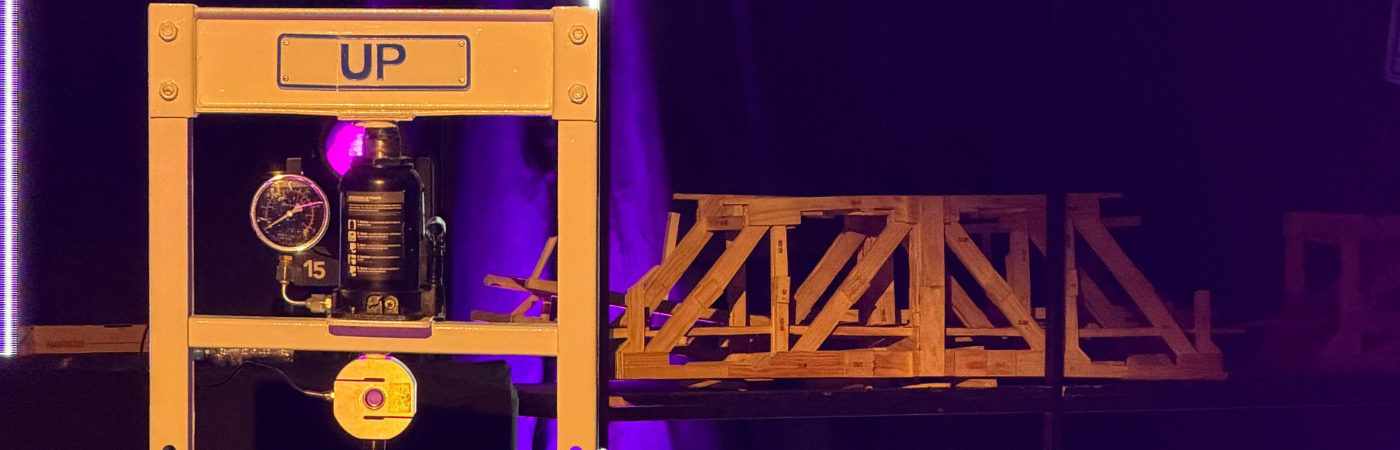
In the well-known marshmallow and spaghetti tower challenge, teams of young children often outperform groups of highly educated adults. The adults spend too much time searching for the perfect solution. The children build, test, watch the tower fall, and begin again.
They do not know more about engineering.
But they are willing to learn from what is happening in front of them.
That is another thing schools should teach: not to confuse making a mistake with failing, to change strategies without abandoning the purpose, and to understand that progress often occurs before it becomes visible.
A diploma can open a door.
The ability to continue learning will allow students to walk through every door that comes after it.
The more tasks machines can perform, the more value will have that which demands awareness, human connection and responsibility.
PwC found that the new tasks emerging in jobs most exposed to AI are 2.5 times more likely to require empathy, judgment, and creativity.
This challenges a very common idea.
The arrival of technology does not make human capabilities less important.
It makes them more necessary and begins to demand them earlier.
A young person can deliver a flawless assignment created with artificial intelligence and still not know how to defend an idea, listen to an objection, receive criticism, work with someone different, or get back up after making a mistake.
They can build a successful persona to show to the world, and, at the same time, not know who they are when no one is applauding.
Schools should teach students to engage in dialogue, present ideas, negotiate, collaborate, and make decisions.
They should help them manage frustration, sustain their attention, and recognize invisible progress.
They should teach personal finance, entrepreneurship, digital citizenship, and social-emotional well-being—not as a collection of isolated topics, but as tools for life.
And they must offer real problems. Situations in which there is no single correct answer. Projects that require students to research, choose, build, make mistakes, receive feedback, and try again.
Education and action are like two legs.
With only one, we can move forward a little.
To go further, we need both.
When a family asks what a school should teach, deep down, they are not only asking about academic subjects.
They are asking whether their child will be able to find a place in a changing world.
Whether they will know how to keep going when something does not turn out as expected.
Whether they will have the tools to choose freely, build healthy relationships, manage their money, defend an idea, and do something good with their abilities.
That is also the question we ask ourselves at DiME.
That is why our model goes beyond having students accumulate information. We want them to understand and apply what they learn.
They work on real-world problems through the case method.
They develop public speaking and storytelling skills starting in middle school.
In high school, they learn about emotional intelligence, personal finance, programming, negotiation, and persuasion.
We do not teach these capabilities because we know exactly what profession each student will choose.
We teach them precisely because we do not.
We want every student to be able to use artificial intelligence, but also to close the screen and think.
To analyze data, but also understand a person.
To build a solution, explain it clearly, listen to a different point of view, and take responsibility for its consequences.
I do not believe a school should boast that it already has all the answers.
A good school must have the courage to ask better questions, examine what it does, and change when reality changes.
Artificial intelligence can produce a text, propose one hundred solutions, and anticipate different scenarios.
But it cannot decide for a young person what kind of person they want to become.
It cannot choose what is worth defending, whom they want to help, what they will do with their freedom, or how they will respond when the path does not unfold as expected.
Those choices belong to each person.
And walking alongside them as they discover their answers remains one of education’s most human responsibilities.
Perhaps the question is no longer how much a student can remember, but what they are able to understand, create, and transform with what they learn.
Because the future does not need young people who compete against machines.
It needs people who know how to use them without surrendering their judgment, responsibility, or humanity to them.
Choosing a school is not simply deciding where a young person will study for the next few years.
It is choosing who will walk beside them as they learn to build their place in the world.
Roberto Ovalles Mostajo
Deputy Director, DiME International School
Fuentes principales consultadas
· Hashmi, Nada y Anjali S. Bal. Generative AI in Higher Education and Beyond. Business Horizons, 2024. Harvard Business Publishing, BH1280.
· Horvath, Jared Cooney. The Limits of GenAI Educators. Harvard Business Review, 2024. H08AV5.
· Shrier, David L. Reskilling and Developing Cognitive Flexibility. Harvard Business Review Press, 2024. 1390BC.
· 2026 AI Global Jobs Barometer, PwC, 2026.
· Skills in the AI Age, OCDE, 2026.
· Generative AI and Jobs: A 2025 Update, Organización Internacional del Trabajo y NASK, 2025.
· The Future of Jobs Report 2025, World Economic Forum, 2025.
· The 2026 AI Index Report: Education, Stanford HAI, 2026.
· AI Tutoring Outperforms In-Class Active Learning, Kestin et al., 2025.
· Generative AI Without Guardrails Can Harm Learning, Bastani et al., 2025.

Follow Us!


All rights reserved © 2024 | Privacy Notice